Overview
The solar cellular trail camera is a wildlife-monitoring prototype designed around intermittent events and limited energy. Motion should wake the camera, trigger a photograph, preserve the original locally, and send a smaller preview to a private gallery.
The system spans embedded firmware, a server, a browser interface, power calculations, and a printable enclosure. Revision A is an engineering prototype: the software and CAD have been exercised, but a complete physical camera has not yet been assembled or field-tested.
Capture and upload lifecycle
The firmware targets the LilyGO T-SIM7080G-S3 PMU board, combining an ESP32-S3 with a SIM7080G cellular modem.
- A motion event wakes the device.
- The camera captures a JPEG and writes the original and preview to SD storage.
- The preview enters an upload queue.
- The device attempts an HTTPS upload and checks the server’s receipt.
- Failed transfers remain queued for retry with backoff.
- Battery-aware scheduling and power-domain shutdown reduce activity between events.
The local original is retained after upload. Cellular coverage should affect when the gallery receives an image, rather than whether the image survives at all.
Gallery and backend
A FastAPI and SQLite backend stores per-camera image histories, telemetry, configuration versions, and requests for full-resolution originals. Per-camera credentials separate devices.
The Field Station browser gallery is designed for phones as well as larger screens. A simulator exercises the event path, including periods without coverage and later reconnection. It makes queue and gallery behavior testable before taking hardware outside.
Browser notifications currently depend on leaving the gallery open. Closed-browser mobile push is outside the implemented scope.
Power and communications
An executable power model explores the relationship between event count, upload cost, solar input, and available battery energy. The documented default scenario estimates 0.95 Wh per day at 100 events and about eight days of cold-derated reserve without sun.
Those figures are model outputs, not measured runtime. Weak cellular signal, frequent activity, shade, and inhibited cold charging can change the balance substantially. Actual sleep, capture, and transmission energy still need to be measured on the assembled hardware.
LTE-M service, compatible camera operation, charge-temperature protection, and night illumination are also bench-validation items.
Enclosure and service access
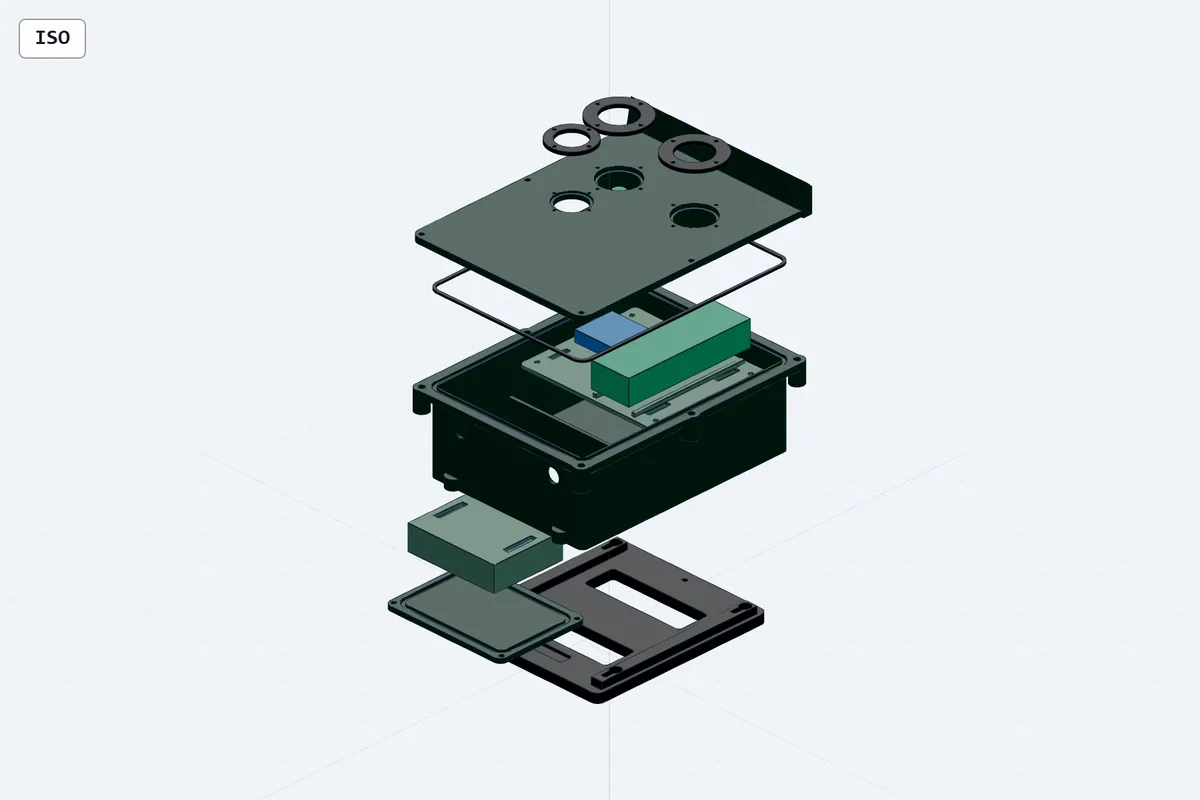
The mechanical design separates ten printable parts. Editable STEP geometry and STL exports are accompanied by assembly views and geometry reports.
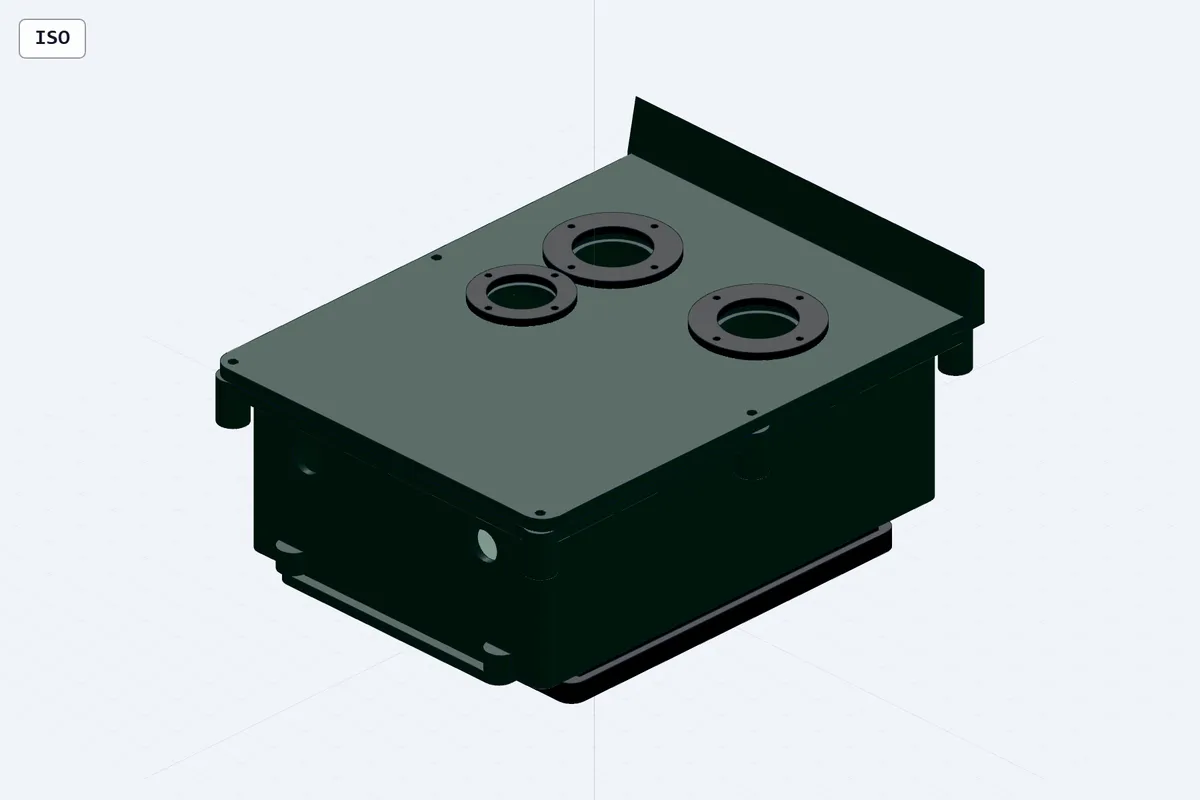
The enclosure provides separate camera and infrared openings, a replaceable electronics carrier, a battery hatch, and independent tree and adjustable solar mounts. Purchased components appear as dimensioned envelopes in the CAD; module-specific supports still need to be matched to the actual parts.
The images on this page are CAD renders. They document geometry and service access, not a weather-sealed product.
Validation and next milestone
The local backend and simulator run, the embedded firmware compiles, and the CAD exports have been validated. The next physical milestone is a complete bench path from motion to photograph to local storage to cellular upload to viewing.
After that, measurements need to replace the power-model assumptions, and the battery, charging behavior, optics, and enclosure need qualification. The prototype does not yet demonstrate unattended outdoor reliability, certified ingress protection, recognition of wildlife, or multi-month autonomy.
The source is private. This page records the architecture and current evidence without presenting simulated images or rendered hardware as field results.
Build photos