Overview
These lights use printed structures to hold LEDs in geometric forms. The collection includes an Ethereum-shaped desk light, a related wall piece, and a larger open-frame sculpture with illuminated edges and diagonals.
The printed object and the light are equally important. One establishes the shape; the other changes how that shape reads when it is switched on.
Desk and wall lights
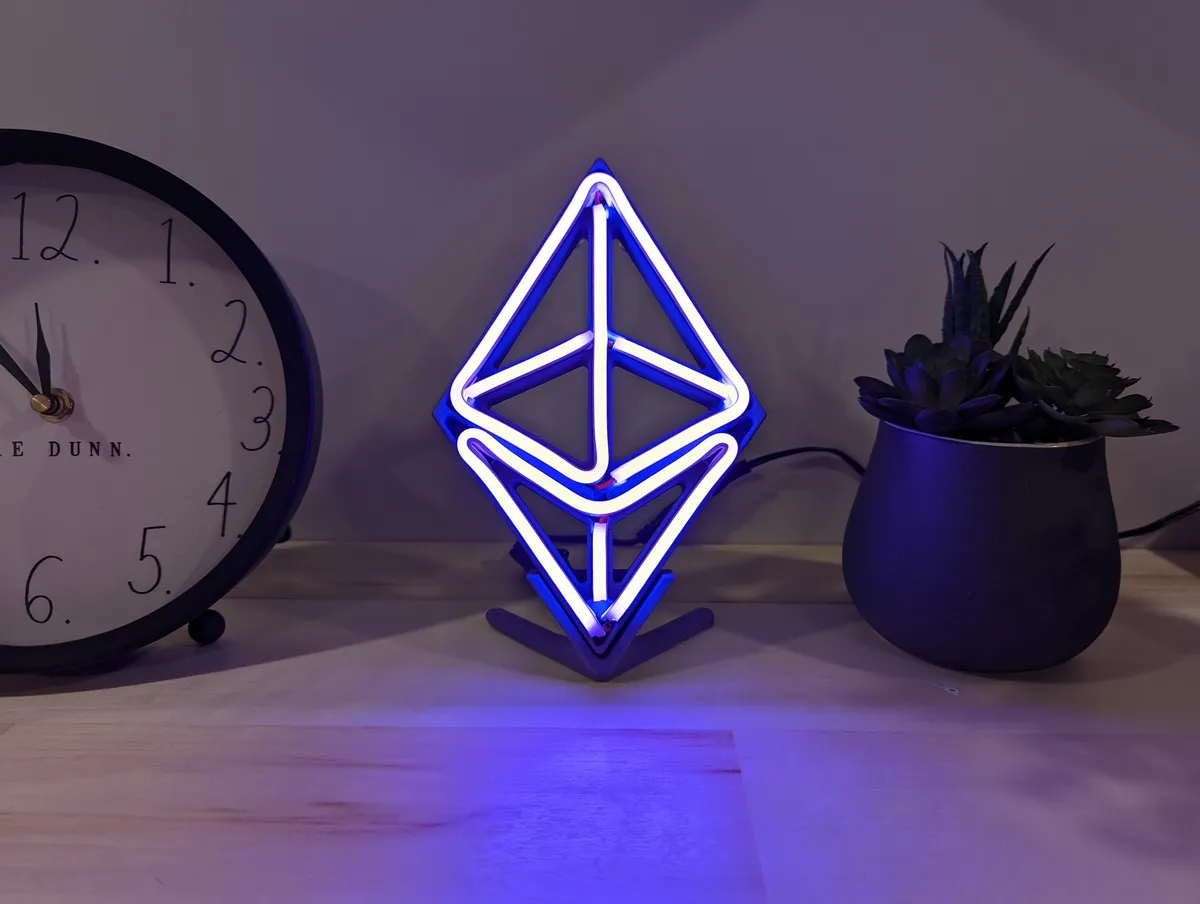
The desk piece holds continuous glowing lines in a freestanding geometric frame. The cover photograph shows the finished light beside ordinary desk objects, giving the scale and intended setting.
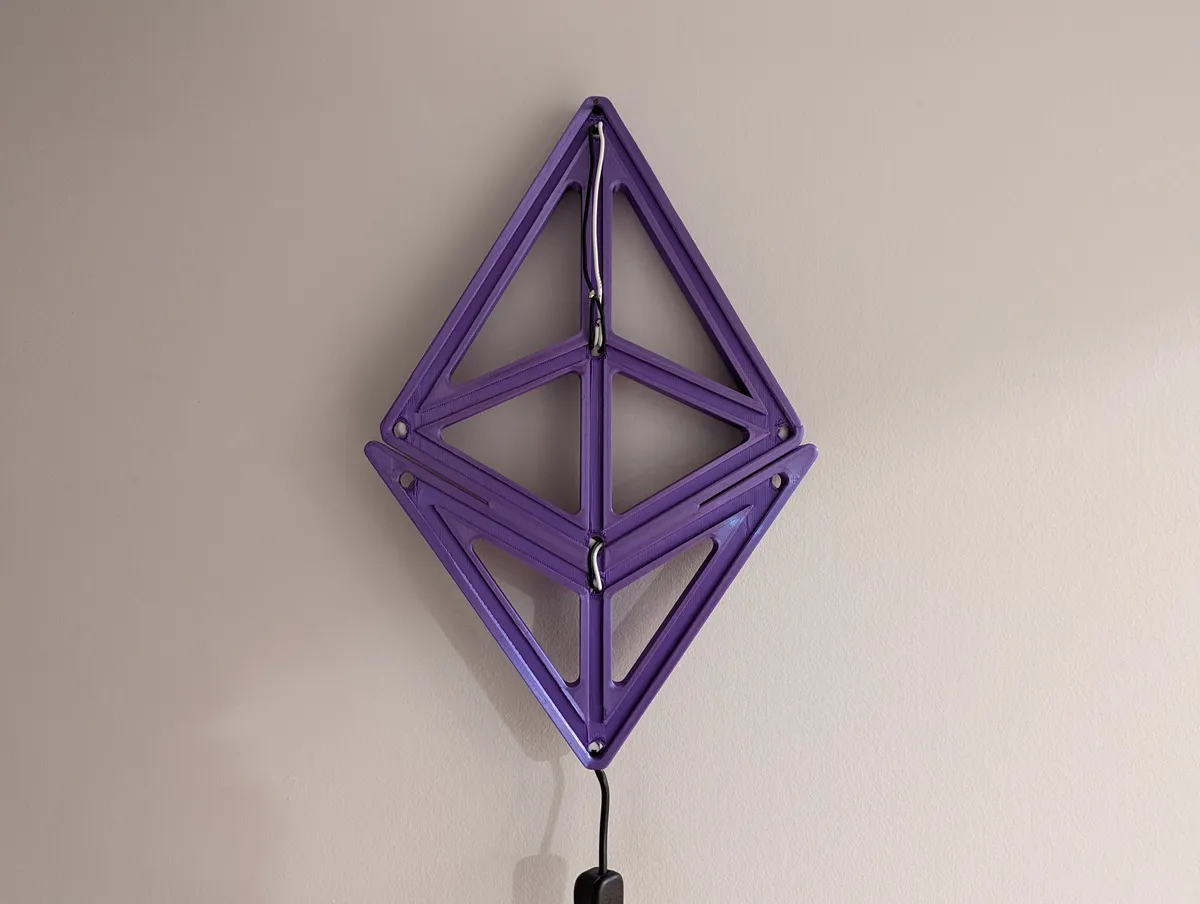
An unlit wall photograph exposes the frame’s channels and support structure. Without the glow, it is easier to see the printed geometry that positions the lighting.
The archive contains multiple eth and ether STL variants associated with these frames. The versions preserve the exploration of the shape across different physical arrangements.
Open-frame sculpture
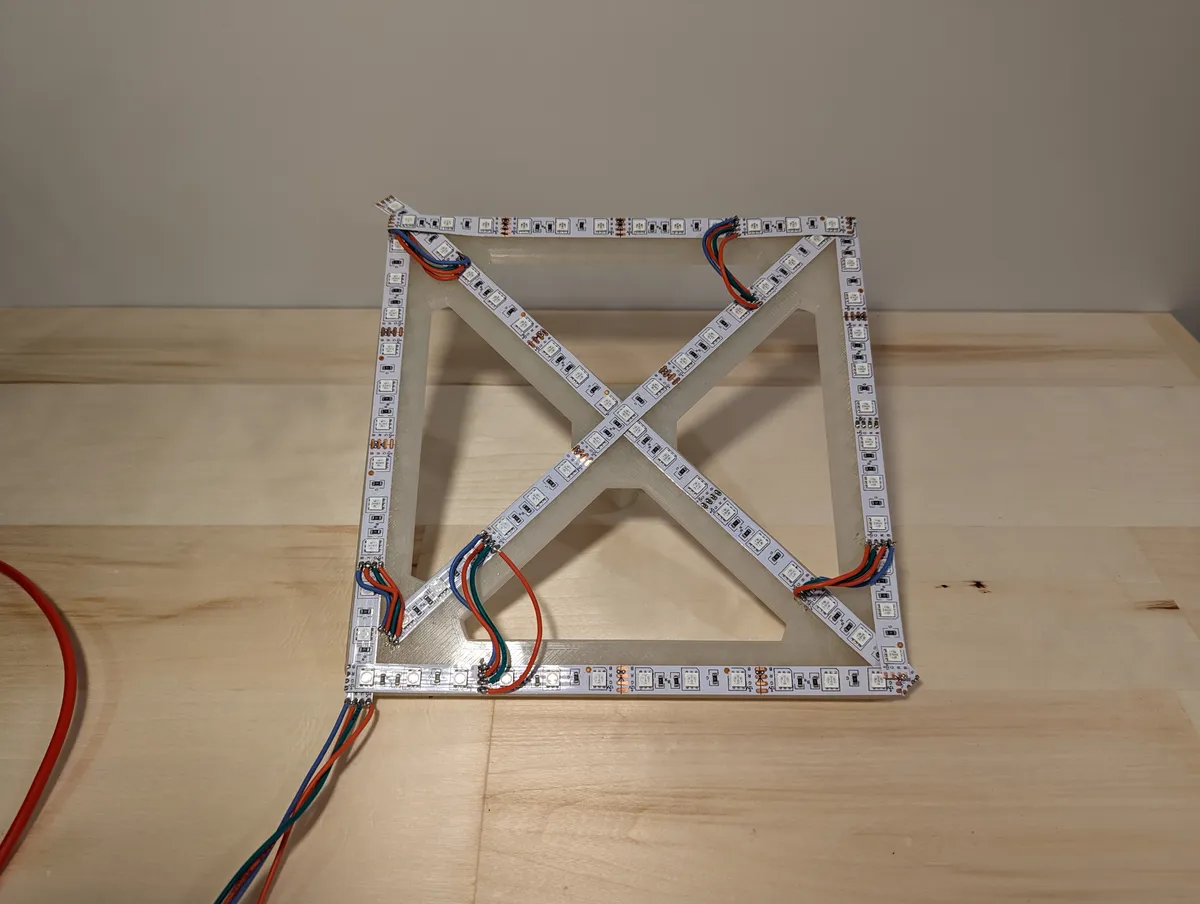
The larger build uses strips along the edges and diagonals of a three-dimensional frame. An assembly photograph leaves the individual LEDs and wiring visible.
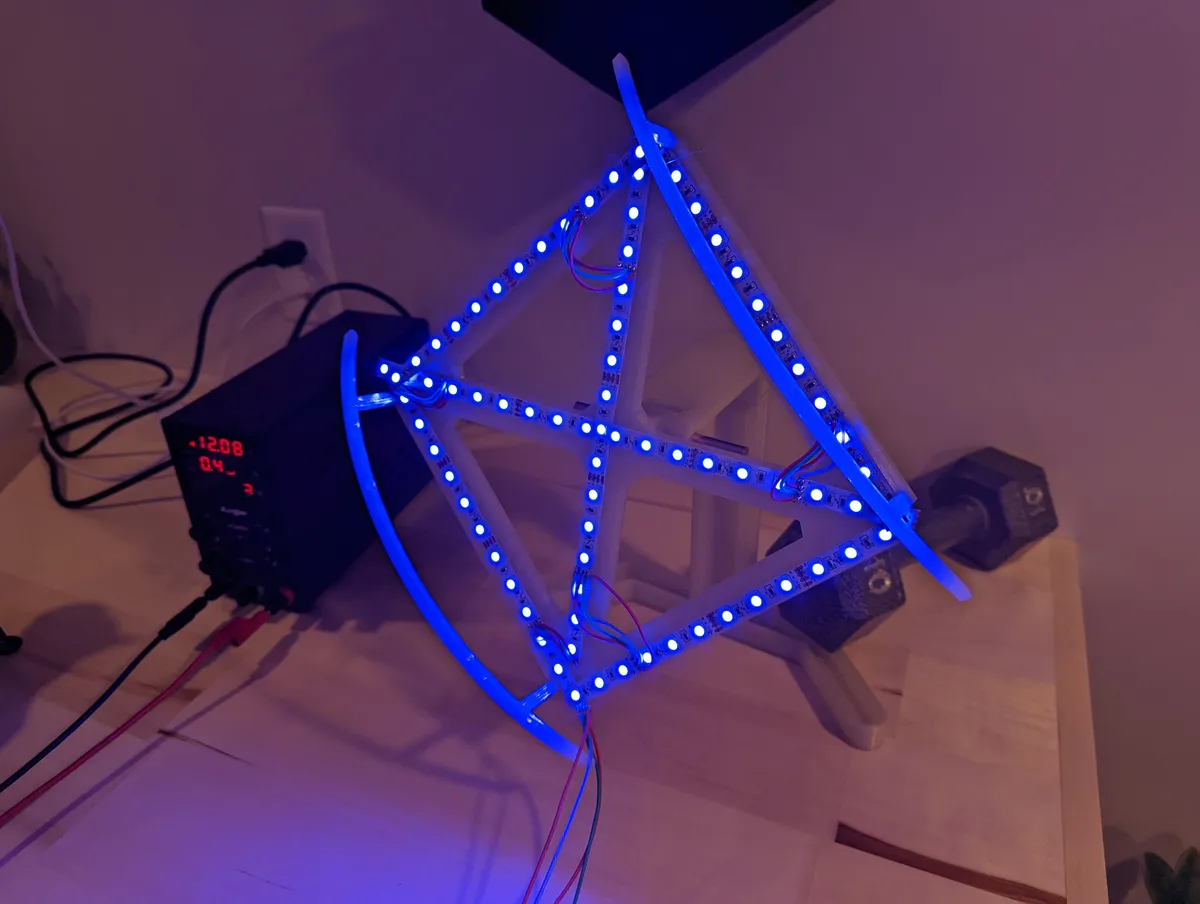
The completed sculpture has photographs in blue, red, and green settings. Those images establish multiple illuminated appearances, while the assembly view shows the physical arrangement behind them.
The record does not identify a particular controller or animation protocol, so the page describes the photographed lighting states rather than assigning an undocumented control system.
Structure and light placement
In the small light, the continuous luminous line is the dominant visual element. In the larger sculpture, individual points of light trace a spatial frame.
Both depend on the structure locating the LEDs consistently. The unlit and assembly views explain where the light sits and how it follows corners and intersections. The final views show the combined effect.
This is the connection between the CAD and lighting work: the printed frame is a fixture for the visible line, rather than simply an enclosure around electronics.
Build record and related work
The gallery keeps three useful states together: the unlit frame, exposed assembly, and illuminated sculpture. These original photographs document fabrication and integration rather than a simulated lighting render.
The Rust furnace lamps use another approach, hiding the light inside a painted shell. Here the structure and the light path remain visible as the main subject.
The contribution is the printed framing, physical assembly, and lighting integration. The emblem itself is an existing design used as the shape of a decorative object.
Build photos