Overview
This collection brings storage and small mechanical interactions into tabletop accessories. The dice box opens into a place to keep dice and a lined area to roll them. The life counter represents a number with separate rotating rings.
Both objects are meant to be handled during a game, so their usefulness depends on how the printed parts fit together as well as how they look.
Dice box layout
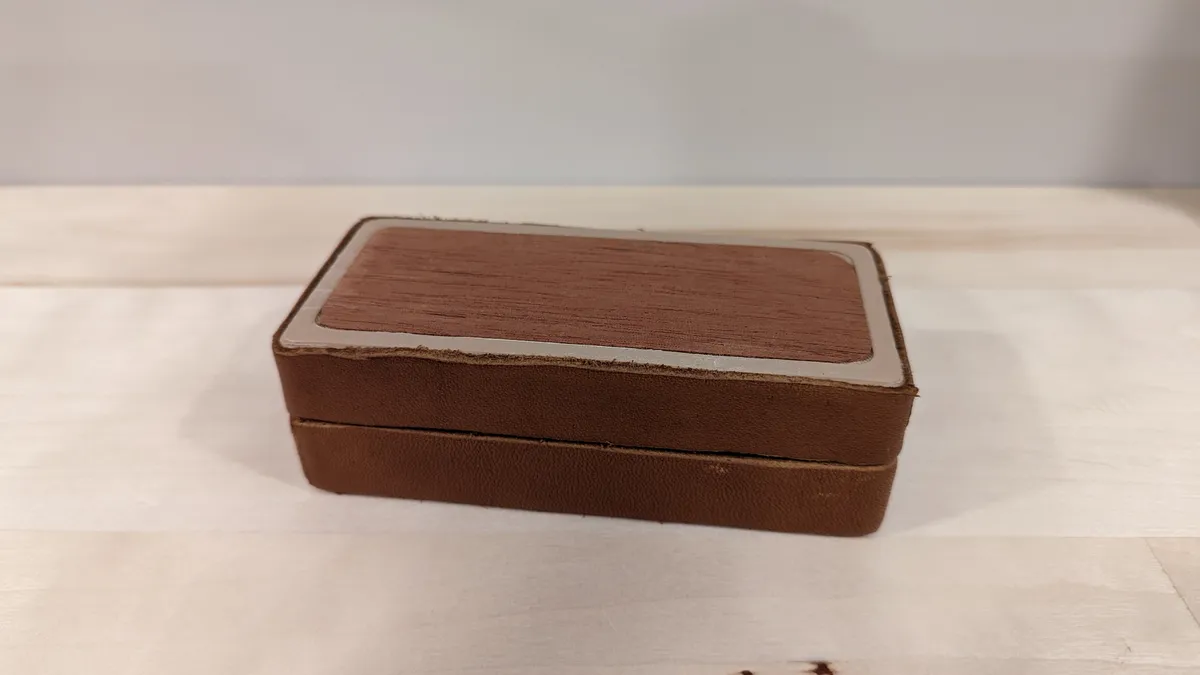
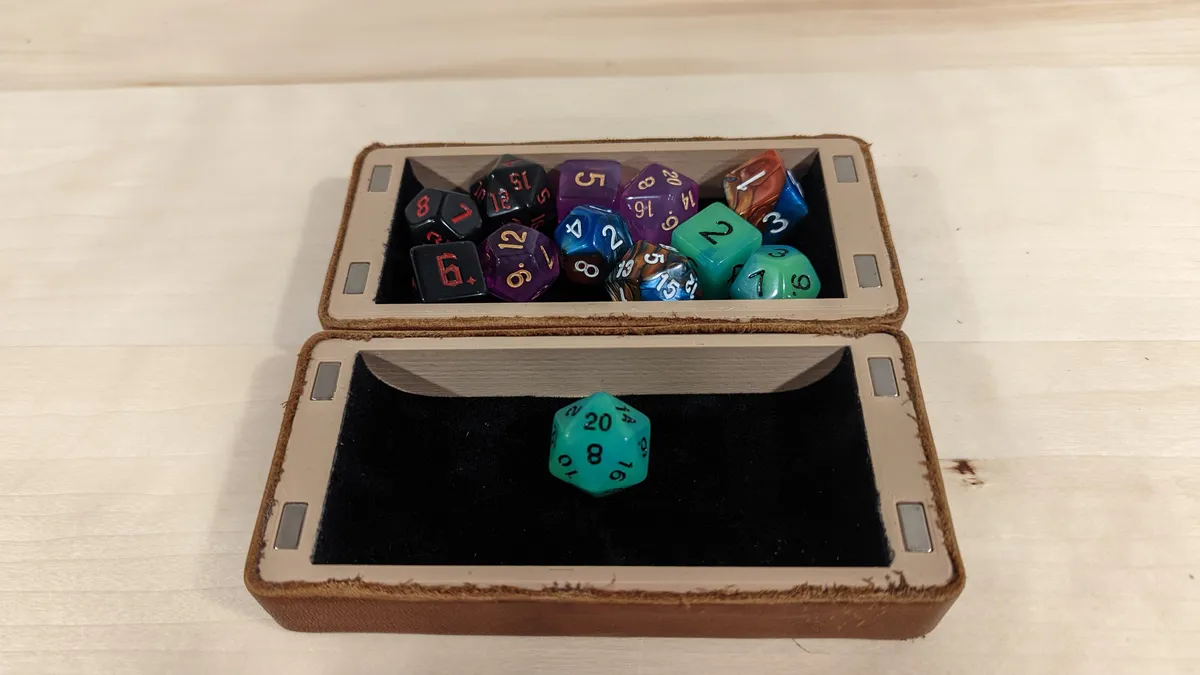
The open box has two usable halves. One holds a set of dice, while the other provides a dark-lined rolling surface. A closed photograph shows the exterior shape and textured lid.
The finished example combines a brown printed body, lining, and inset closure pieces. The photographs preserve the open and closed states, which explain the object more clearly than one presentation angle alone.
Box files and variants
The part archive includes DiceBoxTop.stl, DiceBoxBot.stl, DiceBox.stl, and DiceBoxCardSize.stl, along with sample and decorative variants.
These names document several versions of the idea. They are not a claim that every lid, base, or decorative export is interchangeable. The open and closed photographs identify the finished style presented here.
The lining and closure details belong to the assembled object; the printed shell by itself is only part of the build.
Rotating life counter
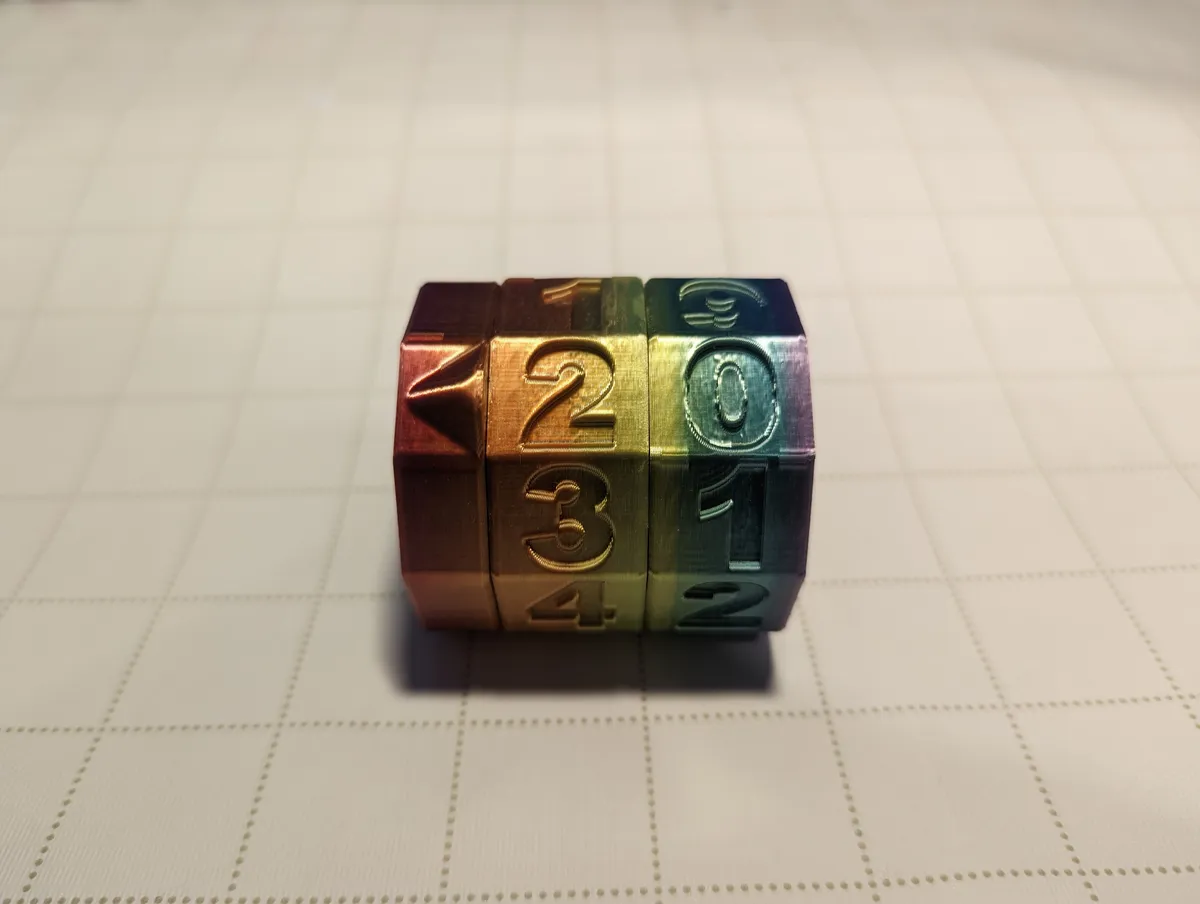
The counter uses numbered rings assembled with end pieces. Turning a ring changes the displayed digit, creating a compact physical record during play.
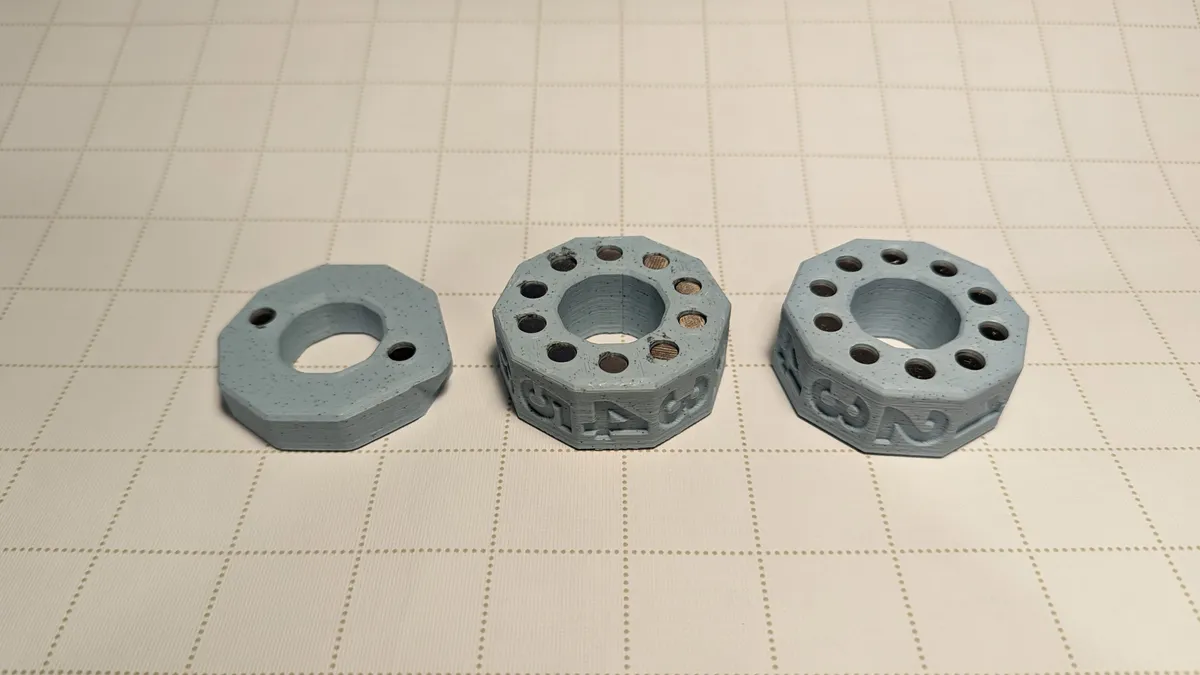
A parts photograph shows the unassembled gray pieces, while a second photograph shows a completed multicolored counter. That pair makes the mechanism easier to understand: the visible number is built into a part that can move independently.
The archive includes counter digits and rings, pointers, an endcap, a roller, an indicator, and a stand. Some files represent alternate arrangements within the same group of experiments.
Fit and assembly notes
The box and counter have different fit requirements. The box needs its halves and closure details to meet; the counter needs moving rings that remain readable and usable after assembly.
The surviving record contains the parts and finished builds rather than a dimensioned tolerance study. The loose-part photo is therefore useful alongside the assembled one when identifying which pieces form the mechanism.
Photos and related work
The gallery shows the box closed, the loose counter parts, and the finished counter. These are original build photographs.
The Catan organizers explore fitted storage for another set of game pieces. Together these projects document printing, assembly, and finishing of small objects that support play at a table.
Build photos