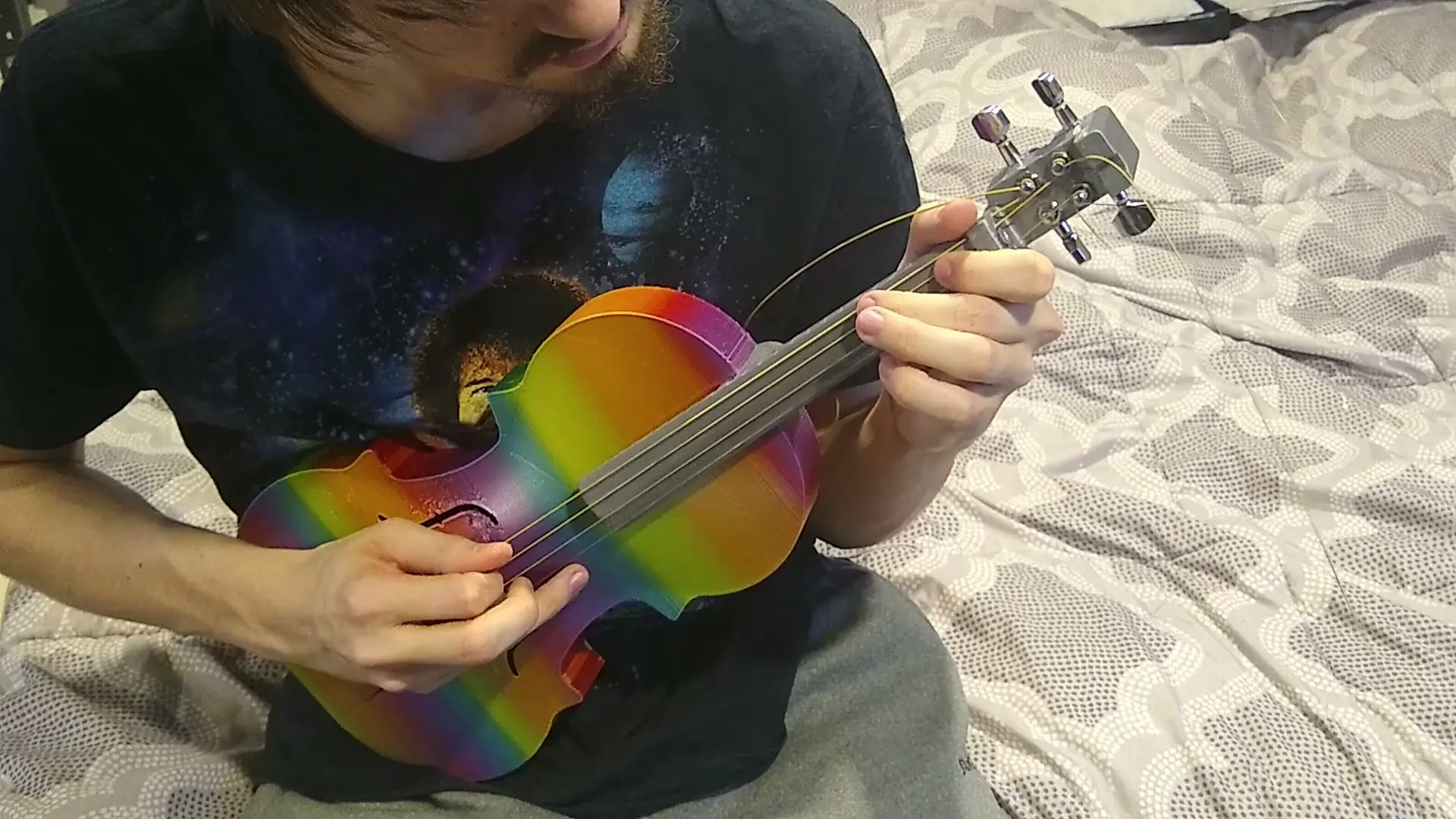
I found out I could print a violin body on my CR-10 3D printer, so I tried it. I used the Hovalin design by Hova Labs, a 3D-printable violin, printed the rainbow body upright in one piece, and assembled it with a printed neck and bridge (the piece supporting the strings above the body) and guitar tuning machines, which adjust string tension to change pitch.
The body alone took about 20 hours to print.
The print was only the beginning. I still had to find out whether the assembled instrument would make a usable sound.
Before the bow arrived Link to section: Before the bow arrived
My violin strings and bow (the tool drawn across the strings to make them sound) had not arrived yet, so I fitted acoustic guitar strings and made a plucked-string test. It was a temporary setup, but it let me check the assembled body, tuners, bridge, and fingerboard (the surface along the neck where I press the strings) with actual notes.
The original video on the project page shows the instrument up close before the playing starts.
The rainbow bands are visible across the print layers, with a gray neck and bridge against the colored body. The same page has photos of the body on the printer and after printing, before the strings went on.
Then I tried a bow Link to section: Then I tried a bow
After the bow arrived, I started practicing. The second clip is from roughly three days in: I hold the violin at my shoulder, bow the strings, and change notes with my left hand. It is an early playing attempt, which is exactly what I wanted to keep in the record.
You can watch both tests with captions or read their text alternatives.
Hova Labs designed the Hovalin. My part of this build was printing and assembling it, testing the sound, learning to play it, and filming those first results.